

A new round of garden questions (March 2021)
There it was again, the round of garden questions via the well-known Instagram. And our self-proclaimed garden pro who has the answers up her sleeve. There were a lot of them, so we'll do it in three parts. Part one of the new round of garden questions (March 2021):
The best time is late March/early April, and then indoors. Take good soil and no, that is not potting soil. It contains too much food. It must be nutrient-poor soil, otherwise you will get long thin blades instead of healthy, sturdy stems. Special sowing and cutting soil is best. If you only have potting soil, mix it with sharp sand. Ratio 3:1. Sow in containers where water can drain at the bottom. Before sowing, you must moisten the soil well. I cover the seeds with a thin layer of vermiculite, but it can also be done with sowing soil. If you cover the top with plastic you create a good, moist temperature, but you have to be careful that it doesn't rot. Dahlia germinates within 14 days.
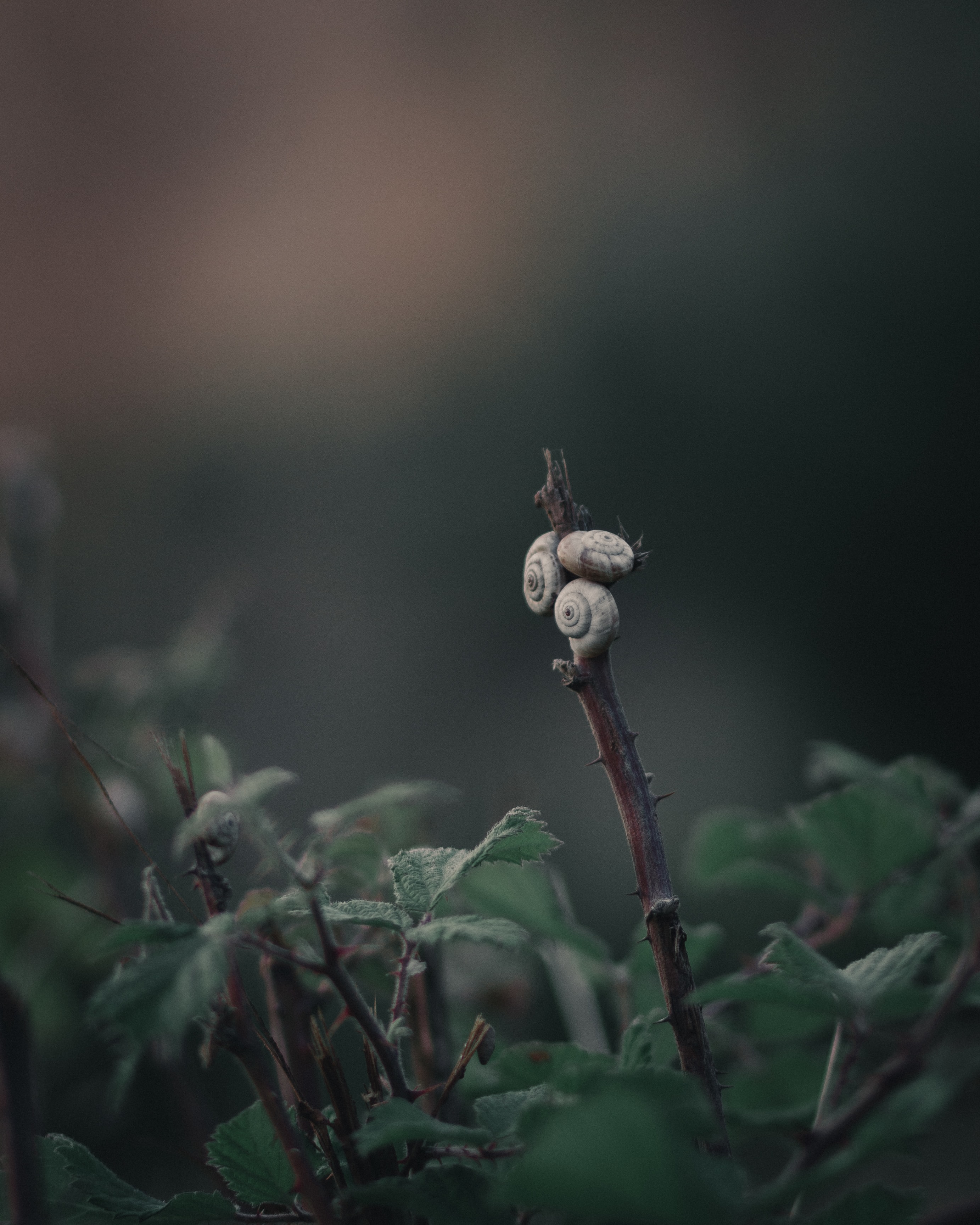
When the seedlings have about four leaves, you can repot them. One seedling per pot. When the plant is about 10 cm, pinch out the growing point so that it starts to branch. After mid-May, when you no longer expect night frost, plant them outside. They will bloom sometime in July. Watch out for snails when they have just been planted outside.
Actually 'just' at the better garden centers, but I also often search on the internet. Then I can immediately read what the pros and cons are.
But actually the best answer is that you should look for a great city garden store that suits your taste. These stores specialize in small gardens and balconies and you will of course soon end up in pots. There are a lot of those City Garden Shops, and you can find them all over the country. See City garden shops in the Netherlands.
And a nice one that delivers throughout the country and sits 'on' the pots: Vegetable – a City Garden Shop. A city garden shop in Middelburg, Zeeland. And not just any one: although the store is of a normal size, you can spend hours there looking for the perfect plant. There is a 'Plant Hotel'; useful for when you are on holiday. And a 'Plant Shelter'; plants that are looking for a second home (Zusterstraat 10).
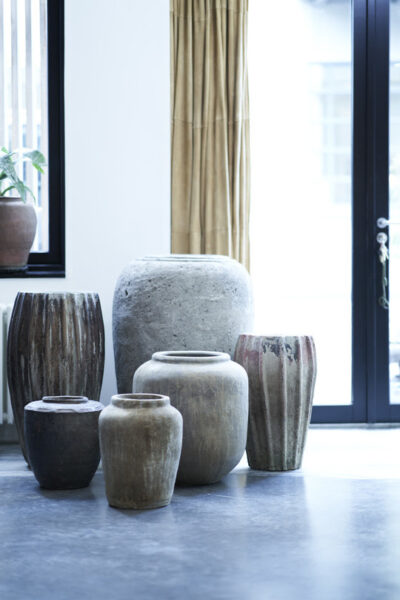
And the pots in the photo above are from Raben's Saloner. Very beautiful, I think.
If I were to create a tropical garden, I would definitely start with a banana tree. Nowadays there are varieties that can withstand a few degrees of frost and such a banana tree immediately creates the right atmosphere (and is a lot more original than a palm). Be careful that you are indeed buying a tree that can withstand frost, because we have seen recently that it can still freeze occasionally. A banana tree that can withstand frost also loses leaves and the tree dies above the ground. So you have to start from scratch every year (it works!). Unless you wrap it up properly in the fall. A tree that dies to the ground usually does not reach flowering, the season is too short for that. Once it has been wrapped you might be able to get those beautiful flowers. You won't get bananas here in the Netherlands, but hey, you can have that.
Gray-leaved plants can usually withstand drought well. But Oleander, Hibiscus and Bamboo also belong in a tropical garden. There are various types of palm trees for sale that can survive a number of degrees of frost. If you choose bamboo, choose a species that does not proliferate. A few more plants that work well: Eucalyptus, Gunnera, Aloe striatula, Rosemary, Russian sage, roses. I would also plant some fruit such as: Pineapple or Kiwi berry.
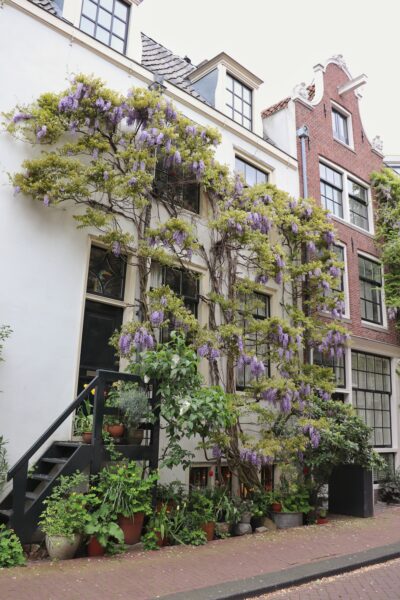
That's a tough question because everyone likes something different. But still some tips:
Look where the ideal places to sit are at certain times of the day. Where is the sun to make a lunch spot? And where can you enjoy the sunset in the evening? Also think about possible shady spots. The best shady spots are under a tree, logical of course, but still, in a small city garden, do not choose a tree that grows too big. There are many types that remain compact. Also consider whether they should remain green in the winter or whether they should bloom in the spring. Do choose something with overhanging branches that you can sit under. Determine where the shady spots are based on that tree. You can plant shade plants (hostas) there or make a small pond - it really does not have to be big to still create atmosphere. In the places that become very dry and warm, you can plant grey-leaved plants such as lavender and rosemary (all herbs love heat).
If you put away some evergreen shrubs, your garden will also have something attractive in winter. Do not plant shrubs that are too small, as this will make them look smaller. Take the Dipetta for example. It smells nice, is beautiful in winter and grows slowly. You can plant low-growing fruit trees against the fence. You have to guide them along mesh so that they don't take up too much space.
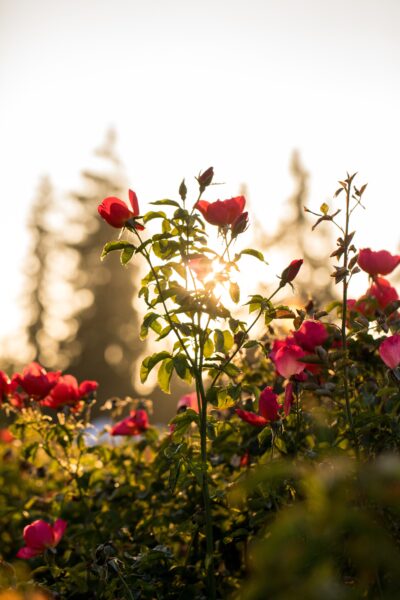
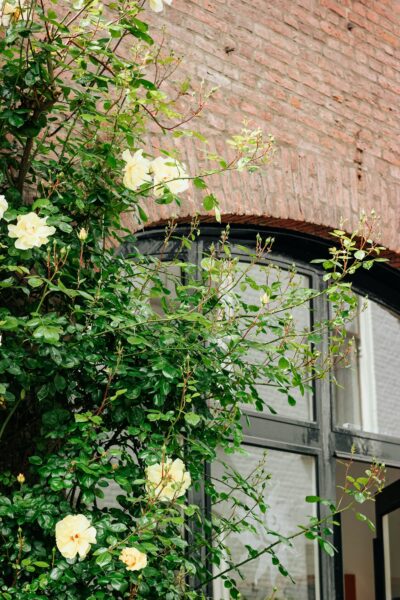
Whatever you plan, always think in combinations. The following plants look good with dark roses: Persicara bistorta or pink Zeeuws knot.
For white rose: Salvia, Geranium Roanne, Epilobium. And iEtching round combines nicely with something elongated (think of plants with beautiful decorative leaves).
The Helleboris (blooms in beautiful colors at the end of winter) is beautiful and always shows the first signs of spring. Some long-flowering perennials are Nepeta (blue flowers), perennial geranium (from pink to blue), aster (blooms late, blue), Geum (orange, blooms early), licorice plant (blue).
It is also nice to think of attractive plants for insects in the city. Nice smelling plants, plants that need a lot or little water and any pruning required.
If there is enough sun in the north-facing garden, the choice is of course much greater. But also think about the wind! Some plants are sensitive to this. There is a difference between 'deep shade' or a place where the sun shines for part of the day. Everything will bloom less in deep shade. Plants that can withstand deep shade are often evergreen because they also catch light in winter. Go for shrubs or trees with beautiful leaves in these places.
Some tree species for shade: Breadtree: beautiful shiny leaves. Flower color is red. Ruscus aculeatus: upright, densely branched, remains evergreen. Snowberry: berries are poisonous, 150 cm high. Japanese maple (Acer): also wants a little sun, beautiful autumn colors, many varieties. Slightly acidic soil. Fagus, a beech. Will be very big! Currant tree (Amelanchier), blooms early in the spring. Provides currants that the birds love later and is easy to maintain. American dogwood: white-green flower umbels, 300-500 cm, beautiful autumn colours. Is not sensitive to wind and attracts insects.

A list:
Caudatum (man's ear): ground cover 15 cm.
Euphorbia: many species, from creepers to shrubs.
Lamiastrum (dead-nettle): many types and colors.
Ostrich fern: like most ferns, it can tolerate shade well.
Periwinkle: blooms blue.
Golden strawberry: ground cover with yellow flowers.
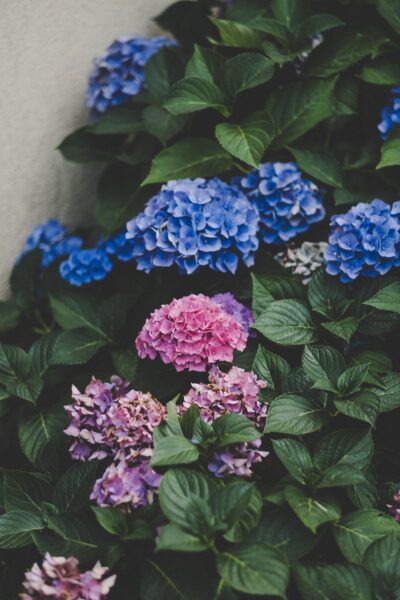
The Berberis has vicious spines, grows to a height of 25 to 200 cm and is attractive to birds (nice!). The Camellia is evergreen, needs humus-rich soil, smells wonderful and blooms in multiple colors. It can grow up to 250 cm high. The Hydrangea is well known and rightly so: it is an easy shrub that comes in many colors and grows between 100-300 cm high.
Juniper is a conifer with a beautiful leaf shape. Remains green and grows between 60-600 cm. The Mahogany bush has pristine leaves and bright yellow flowers in mid-winter. So evergreen, and up to 150 cm high.
A Pieris grows slowly and has the advantage that it leaves the soil under the tree alone because it does not root deeply. In the spring it produces bright red leaves (note the type) and grows to a height of 150 cm. A Prunus is evergreen with white flowers, 125-700 cm. A Rhododendron is also evergreen and grows on acidic soil (add garden peat) and is available in white, pink, purple and red blooms. 100-200cm. Finally the Skimnia that blooms in the spring and produces berries in the fall. This also grows on acidic soil.
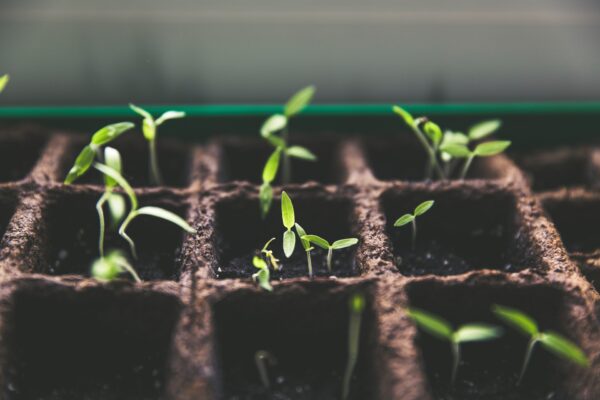
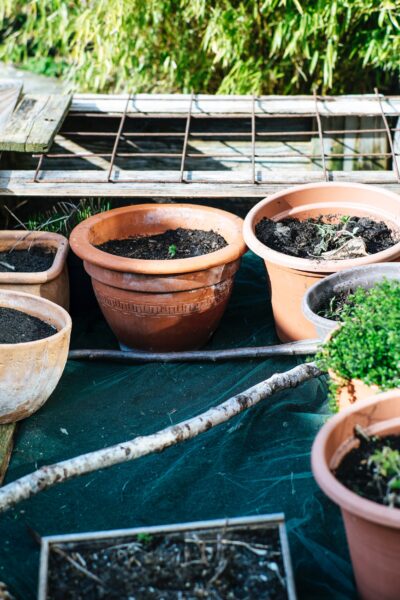
* Take pots or containers where excess water can drain from the bottom. Sounds logical, but just think about it ;-).
* Do not use potting soil, but sow or cutting soil or potting soil mixed with sharp sand. Ratio 3 to 1.
* Do not sow too early and sow very thinly because most plants can only go outside after mid-May. And remember to include the correct names as well. Keep soil moist, but not soaking wet.
* Transplant when the plants have approximately 4 leaves. Do not pull them out or they will break off. Scoop out and transplant into potting soil. One plant per pot or, for example, in a roll of toilet paper. Then you can place it in the ground outside using a roller.
* When the weather is nice, allow it to get used outside during the day, but inside at night.
* Sprinkle fertilizer before planting outside. Do not throw on the young plants.