


Malawi is Africa's best-preserved safari and tropical destination.
We are driving back to Thawale Lodge in a safari vehicle at a snail's pace when the bushes rustle. A female elephant stands a meter away, her eyes fixed on the other side of the road. A foot waves forward as if accelerating. In three steps, she stands in front of the open vehicle. A smile appears on guide Kenneth's face. We are on the edge of our seats as the elephant brushes her trunk against the front of the car. Three steps further and she is gone. It is 10:15 AM and we have been up since 5:00 AM, just as we have done every morning for the past week. Majete Wildlife Reserve is awake.
We are in Malawi! "Malawi? Do you mean Mali?" or "Ah, Madonna's place" and "Huh, can you go on safari there?". These are just a few of the questions we heard when announcing a trip to the African country. The prejudices stem partly from the fact that for decades the country was primarily known as a destination for charity and missionary work. But Malawi is not called the warm heart of Africa for nothing. On top of that, it has everything you could want from an African trip. Malawi ticks all the boxes for a fantastic destination. The deep blue waters of the bizarrely large Lake Malawi. Safari parks where the Big Five have been reintroduced through conservation projects that are among the most successful on the continent. Green tea hills. An interesting culture. Honeymoon-worthy lodges and no safari traffic jams anywhere.
Malawi is about three times the size of the Netherlands and borders Zambia, Mozambique, and Tanzania. We took a trip from the capital to the north, and this is what that trip looked like.
Chances are that you, When If you book a holiday to Malawi, you arrive in Lilongwe. The capital is not a city where you are likely to linger for days, but after a long journey with a layover, you want to land comfortably. Mitengo House in Area 43, about a 45-minute drive from the airport, is such a lovely place. The guesthouse is owned by Dutch owners who know the country extremely well. You receive a warm welcome there, and everything is well organized.
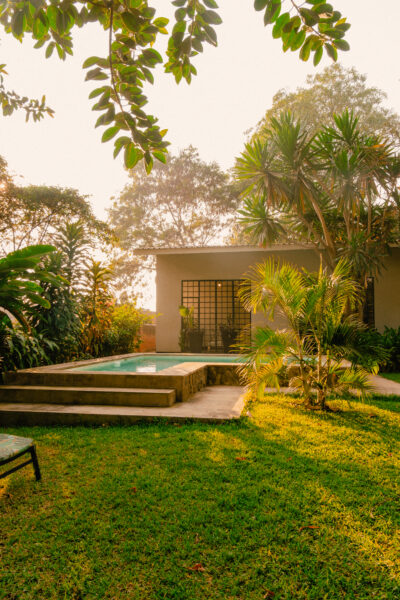
The house itself is a successful blend of modern design and traditional African accents. Concrete and wooden surfaces, local handicrafts on the walls, large windows, and a garden with a swimming pool where you can sit among the birds with your coffee in the morning. We found the food really delicious. In addition to Mitengo, Dilo and Hessel also own Africa House in Lilongwe, and they organize amazing horseback riding safaris in Kuti Wildlife Reserve.
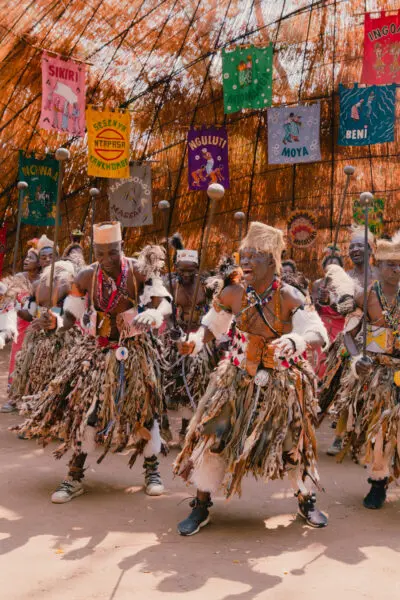
On the drive between Lilongwe and the famous lake (you can read all about it below), we stop at the Kungoni Centre of Culture and Art at Mua Mission. Here you will learn more about the traditions of the Chewa, Ngoni, and Yao, and about the masks of the Gule Wamkulu. Woodcarvers work in the workshop next door, and the dancers performing come from the neighboring villages.
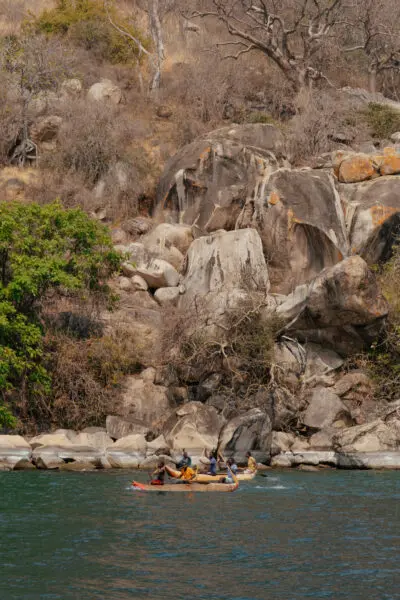
We are hopping from highlight to highlight in Malawi, and Lake Malawi is one of them. Upstream from the Shire River lies a 560-kilometer-long lake that fills pretty much the entire eastern border of the country. It feels like a sea, but with fresh water and without waves. That is actually a bit crazy. But it is nice here. We start our journey gently: first the lake, then the bush. Chilling to the max So with occasional kayaking, drinks during sunset cruises, and stand-up paddleboarding. In the evening, the water turns pink and orange, and silhouettes of hollowed-out fishing boats glide across the scene.
Also interesting: hundreds of species of cichlids live in Lake Malawi, brightly colored fish found nowhere else in the world. Put on a snorkel at a rock formation and within a minute you will be swimming in a cloud of blue, yellow, and orange. Above, sea eagles and hammerkops fly. Swimming is possible, but watch out for the parasite that causes bilharzia. Seek advice from a recognized travel vaccination provider before departure.
We found the fishing villages further along here at least as interesting. Wooden boats are pushed into the water, nets are laid out on the beach, and dried usipa, small silver fish, lie in the sun on racks. Children come running and men pull in nets in groups while the women wash their beautifully colored clothes in the lake.
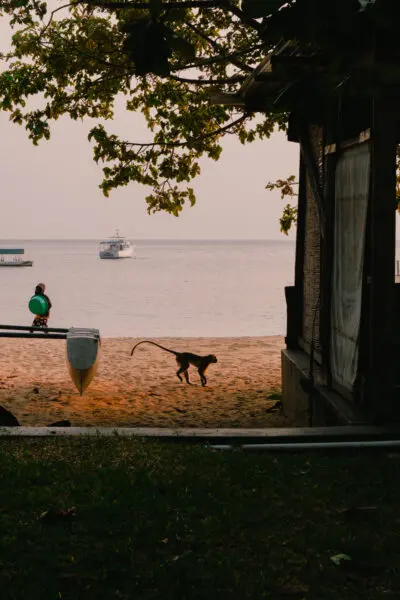
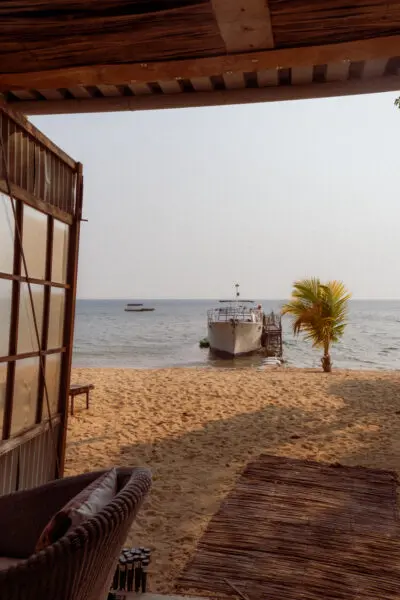
#beachlife. And so, the accommodations don't lie about chilling out either. Norman Carr Cottage is small and personal. Right on one of the quietest stretches of beach on the lake, named after the legendary conservationist Norman Carr. Here, there is no large resort with a pool bar, but a handful of rooms, lovely boat trips, and good food. You step out of your room in the morning and straight onto the sand.
Do you actually want that pool bar then? A little further on lies Club Makokola, larger and more modern with its own beach and even its own runway. The luxury lodges are situated in a green garden with palm trees and a golf course. There are numerous initiatives here that promote sustainability, art, and craftsmanship.
The safari begins here. Waving to the kids, we drive through the villages to the Shire River, which cuts the park in two. The guide for the coming days is already waiting at the jetty, as going up the river by boat is the easiest way to reach our lodge. We watch out for a crocodile on the left, and on the right we see something that looks suspiciously like a hippopotamus. Aha, bingo. We haven't even been underway for a minute.
Upstream, hippos lie like wet pebbles in the shallows. They hiss loudly as we pass, sink until only their ears and eyes are above water, and emerge again a little further on as a surprise. On the bank, three elephants are violently pulling leaves from a tree. Two large crocodiles lie with their mouths open in the last rays of the sun. Bald eagles keep a watchful eye from the branches. The boat ride to the lodge is the beginning of what we will see in the coming days. And what a start. Never before have we seen so many hippos together.
The days in Liwonde are filled with game drives in the early morning and late afternoon and with boat safaris. Out of bed at five in the morning, a cup of coffee in the dark, and then into the car as the light slowly returns and the bush wakes up. Without other safari vehicles around us, we see a lot of wildlife. At the end of the game drive, the guide stops somewhere with a view, flips open the tailgate, and pours coffee as the sun rises. During the afternoon safari, the coffee is swapped for a gin and tonic as the sun sets.
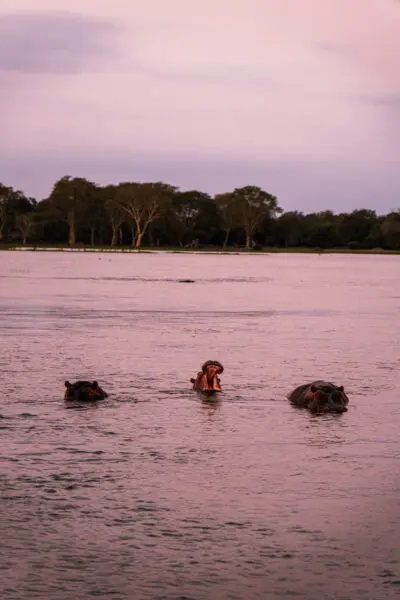
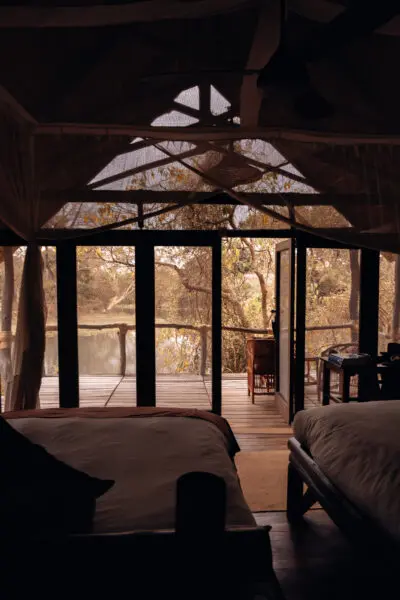
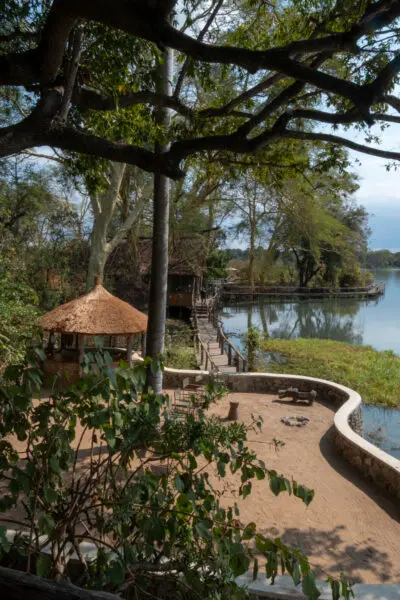
“Look, the neighbor.” We’ve barely opened one eye and are on our way to our first coffee of the day when one of the guides from Mvuu Lodge points out a crocodile swimming casually past. Ten minutes earlier, we found hippopotamus poop a short distance from the zipper of our luxury tent. We are right in the middle of it. Mvuu Lodge is located in the park, on a Shire lagoon. Mvuu means hippopotamus in Chichewa, and that is no exaggeration. They lie literally right on our doorstep, and you can hear them snorting and growling from your bed at night. The tents are spacious and open to the water, with canvas walls, a real bed under a mosquito net, and a bathroom with an outdoor shower. From your own terrace, you look out over the lagoon, with birds in the morning, hippos during the day, and elephants coming to drink on the other side towards evening.
You enjoy a delicious meal on the deck by the water. After dinner, a ranger walks with you to your tent with a flashlight, and waking up at night from a close-range hissing sound or the thought that someone is nibbling at your tent is a relief. part of the experienceThe big advantage of sleeping in the park is that you are already inside in the morning when it gets light. While others are still standing at the gate, you are already sitting in the car with your coffee.
Next to the lodge lies Mvuu Camp, owned by the same person but simpler and much cheaper. If you want the luxury tents by the lagoon, Mvuu Lodge is the place to be.
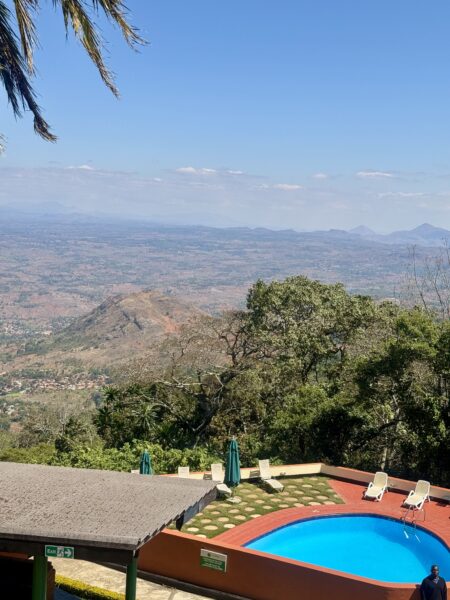
Further south, the road climbs the Zomba Plateau, about 900 meters above the town of Zomba. Zomba was the country's capital until 1975. At the foot of the mountain, colonial buildings line the road, and the plateau itself is Malawi's oldest forest reserve. The scent of pine forest greets you in this hiking paradise. Those with the time will walk here for hours, perhaps even several days in a row. After all, it is nice to stretch your legs during all that sitting in the safari vehicles and chilling by the lake.
You can hike along the Mulunguzi Dam and the Mandala and Williams Falls, through old forest with tree ferns and Mulanje cedars, or to Chingwe's Hole, a hole over 450 meters deep where stories circulate that local chieftains threw their enemies into it. The two most famous viewpoints are Emperor's View and Queen's View, named after Emperor Haile Selassie and the British Queen Mother, who both stood here gazing. On a clear day, you can see Lake Chilwa and Mount Mulanje.
You have lunch at Sunbird Ku Chawe, right on the edge of the plateau.
Safari unaffordable? Park fees in Malawi are significantly lower than in most neighboring countries, and because the country is compact, you don't need domestic flights.
And then Majete, one of Malawi's most beautiful and extraordinary safari destinations. Over the past twenty years, the reserve has comeback created thanks to large-scale nature conservation: elephants, lions, rhinos, and wild dogs, among others, have been reintroduced. Nowadays, you can even spot the Big Five here.
When African Parks took over management in 2003, the reserve was virtually empty. Poaching had left no elephants, lions, or rhinos. What followed was one of Africa's largest rewilding operations, in which thousands of animals were reintroduced. The surrounding villages gained schools, clinics, and jobs in return, and with them a reason to protect the park rather than strip it bare.
“Seeing that elephant from so close was only possible because you respect nature and animals,” says Kenneth, who has been a guide at Majete for more than five years now.
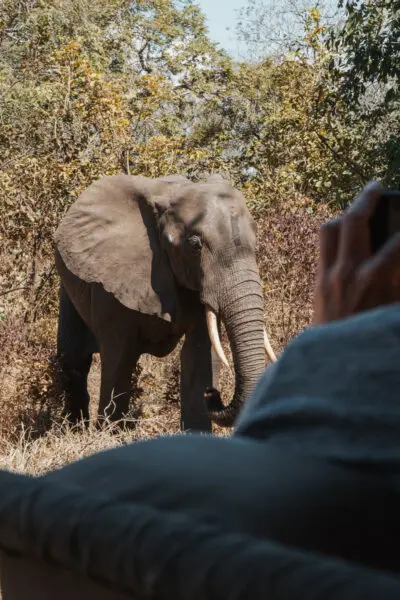
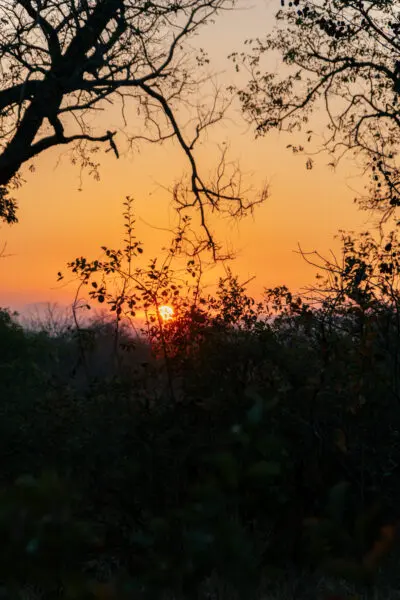
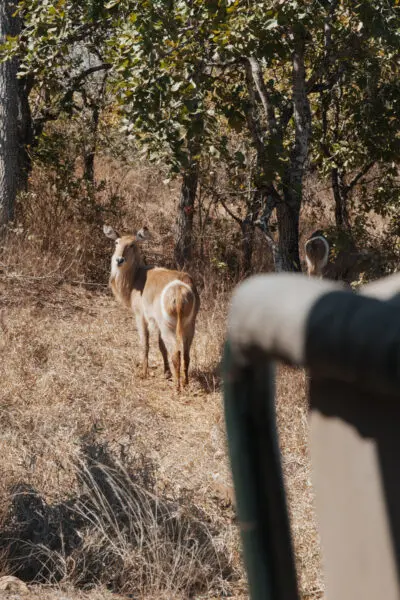
Thawale Lodge is situated in the heart of Majete Wildlife Reserve, completely unfenced, with eight tented chalets (six with air conditioning). Also available is a honeymoon tent with an open-air bathroom. Thawale features a waterhole at the camp where, with a cold Kuche Kuche and a bit of luck, you might encounter lions, cheetahs, wild dogs, leopards, buffaloes, and a herd of elephants. Two activities per day are included in the price, as are all meals.
There is no fence between you and the reserve, so in the evening a ranger takes you to your tent with a flashlight, and you listen from your bed to what is roaming outside. Thawale is owned by African Parks, the organization that manages Majete, and 100% of the revenue goes directly back to the reserve and the surrounding communities. A wonderful base in Majete.
The Malawian kwacha is the currency. Bring cash; withdrawing money outside the cities is not always easy.

And then there is Thyolo, where the hills are covered with tea bushes in neat green rows. At Satemwa Tea Estate, you taste the tea.
On the Satemwa estate stands Huntingdon House, an early twentieth-century colonial house that has been converted into a small, atmospheric lodge. High ceilings, an open fireplace, antique furniture, and a garden overlooking the tea fields. You sleep here right in the middle of a working plantation: in the morning you see the pickers heading into the hills, and in the afternoon you are taken on a tasting.
To fly. There is no direct flight from Amsterdam, so you will arrive with a layover regardless. The most common routes go via Nairobi (KLM to Nairobi, then Kenya Airways), via Addis Ababa with Ethiopian Airlines, or via Johannesburg. Fly to Kamuzu International Airport in Lilongwe and return from Blantyre. This way, you travel through the country from north to south without ever having to drive back. From Lilongwe, you are quickly at the lake, and from Blantyre, you can easily reach Liwonde, Zomba, and Majete.
Travel time Ten to 21 days is comfortable, especially if you also want to see the north.
When. The dry season from May to October is strongest for wildlife: the vegetation is low and animals gather near the water. November to April is green, warm, and wetter.
Visa and vaccinations. Arrange it in advance. Check the current rules with the Ministry of Foreign Affairs and your travel doctor.
Books. You can go alone, but we think it's better with a tour operator. Dutch tour operators offering Malawi include Untamed Travel, Makoke Tours, Better Places, ITG Experience Travel, Fair Mundo Travel, Africa Wildlife Safaris, and BMS Travellers. Additionally, you can of course also book through independent travel agents (Face2Face, Personal Touch Travel, Travel Counsellors, The Travel Club).
More tips
-
Tips for Kystlandet: the Denmark you want to know
-
Tips for the Heart of Jutland (Trekantområdet), Denmark
-
Sønderjylland in Denmark is within driving distance of the Netherlands and is surprisingly fun!
-

Wander Island Vinkeveen
-

Opfriesen: to recharge, Friesland style
-

All together in nature: our favorite Dutch sleeping places in the middle of the greenery
-

Het Roode Koper Estate (a Relais & Chateaux)
-

Hiking Mount Everest Base Camp: The Ultimate Hike – Part 1, the preparation
-

Sleeping by the sea: wonderful holiday addresses on the Dutch coast
-

Switzerland with children: Arosa is the destination for the whole family