


Osaka food guide: tips for restaurants (food and drinks) in Osaka, Japan
osaka, you'll either love it or hate it. We have to admit, the entertainment level is high, but if a place is considered the food capital of Japan, then you got us. Moreover, flying from the Netherlands to Japan to Osaka can be cheaper than flying to Tokyo. Then Osaka is also perfectly located as a starting point for your Japan trip. Osaka's food scene is great, but choosing between all those options can be a bit overwhelming. Voilà , we therefore present the Osaka food guide with tips for restaurants (food and drinks) in Osaka, Japan.
Would you rather have all the searching done by someone else? The people of Travel Legends do it with love.
Now there are two dishes that you should definitely check off, when in Osaka. Takoyaki (Japanese snack, made from wheat flour and usually filled with octopus, tempura scraps, pickled ginger and green onion) and okonomiyaki (Japanese savory pancake). The typical dishes of the city and can actually be found just about everywhere. There is a good chance that you will score a good portion in many places, but if you want to be sure that it really tastes good, try these places:
Takoyaki:
- Takoyaki Doraku Wanaka: located in the Dotonbori shopping area and served in four flavors.
- Takoyaki Umaiya: founded in 1953, where they stick to tradition and the twice-baked method. A simpler variant.
- Kogaryu: a well-known place in the nice Amerikamura district, where you can eat takoyaki in Sankaku Park.


Okonomiyaki:
- Mizuno: Founded in 1945 in the Dotonbor district. The restaurant has 38 seats and is extremely busy. The Okonomiyaki is made with an original recipe.
- Houzenji Sanpei: also in the running for forty years. Here the Okonomiyaki is known for its lightness and generous amount of filling. Many options you can choose from, but we recommend the Suji, Negi, Konjac Okonomiyaki with beef tendon, scallops and konjac jelly.
A few tips for restaurants in Japan:
- Sometimes you will have to wait in line for a while (but these lines go faster than you think)
- Most restaurants only accept cash and some only accept credit cards.
- Download Google Translate to translate the Japanese menus
- Tipping is not mandatory
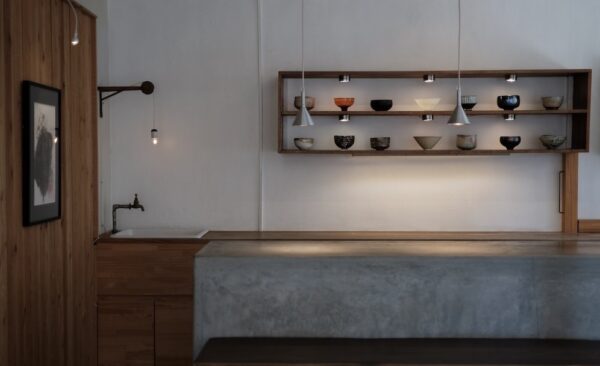
Coffee first soon becomes common in Japan tea first. Not that the coffee doesn't taste good, but because those tea houses are really nice and beautiful. This also applies to Wad Omotenashi Café, hidden in the Minami district near Shinsaibashi. As we said: Osaka is a bit overwhelming, but at a tea house like this you will still get your share of peace in the busy city center. This café serves traditional Japanese tea and sweets (order them!) in a handsome setting with a mix of industrial chic and traditional Japanese.
Matcha (also the latte) and Houjicha are recommended and of course the Mochi with sweet soy sauce and the extremely popular Matcha Kakigori.
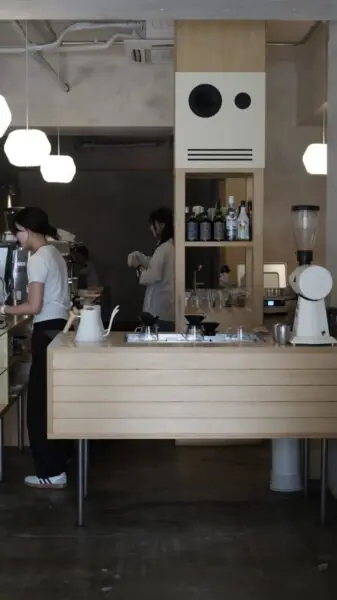
We could make a separate list of the best coffee and tea spots in Osaka. Who knows, we might even do that, but for now, we’re definitely mentioning Ourlog Coffee. Outside this good-looking coffee bar stands a sign that reads 'Coffee, Bakery, Liquor,' which naturally piques our interest. Inside, lovely music plays as the baristas get to work with your chosen beans to brew the best coffee in Osaka. To go with it, grab a treat from the bakery—we wouldn't skip the pistachio bun—and you’re all set for another day of exploring.
Would you rather travel with someone who will show you around all the best of Osaka and still need a place to sleep for the night? At OMO7 Osaka by Hoshino Resorts you will sleep wonderfully and if you book a (not too expensive) overnight stay, you will receive so many nice extras. For example, hotel guests can take free guided tours through the city with an OMO Ranger, who knows the neighborhood like the back of his hand. For example, we took part in a tour of the Shinsekai district (where this hotel is located). In an hour we saw the Tsutenkaku tower and the Janjan Yokocho shopping area. Oh, and we knew where we were going to eat that night. If you do this on the first day of your trip, you are guaranteed to have a list of restaurants that you can check off for the rest of your holiday. Tip of flip, so to speak.


Kushikatsu, or fried skewers that you dip in a thin, sweet, brown-black sauce. You can find them with everything: meat, vegetables and even fruit. Because hey, everything tastes better from the fryer. There is one rule: no double dipping. You can find them everywhere in Osaka, but if you want refined fried food (yes, that is possible!), then you have to go to Bon. In the underground restaurant Kushikatsu Bon in the Kita-Shinchi district you can order high-quality kushikatsu. They serve fried crab legs, duck liver, truffles, caviar: look, that explains the higher price. Moreover, they only stop serving when you say it's enough. Even the ice cream comes deep fried.
Would you rather try a cheaper Kushikatsu? Tengu is a good alternative.
The Michelin-starred Nishitenma Nakamura is one of those dinners that will stay with you for a while. Why? On the one hand because the food you are served is a treat to see and taste and on the other hand because it is different. Many traditional Japanese restaurants are unfortunately run by men and it is rare to see a female owner-chef at the helm. And look, things are slightly different with Nishitenma Nakamura. The two female chefs combine Japanese tradition with some Western ingredients, such as foie gras. They serve a hassun – seasonal small bites that start any good kaiseki meal (traditional Japanese multi-course dinner). And it looks quite good to me here.
Reservations are essential and can be made by calling 81-6-7506-8218.


You will find Yoshitora near Osaka Castle (one of the city's highlights). And you go to Yoshitora for unagi, the house specialty and something you will encounter much more often in the city. Unagi is eel and the Japanese go hard on it. Freshwater eel has been seen as a healthy and luxurious food in Japan for hundreds of years. We also did well on it, especially on Yakitori Ichimatsu's. Since 1922 they have been grilling eel with a delicious sweet sauce. Luxury food also means that it is not the cheapest meal you will find in the city.
It is said that unagi is tastiest in late autumn, but in Japan unagi is considered a summer food. Oh well, all seasons are a reason to give it a try while you're in Japan.
Do you like chicken? Chicken lovers should definitely go to Yakitori Ichimatsu. Yakitori is a Japanese form of skewered chicken meat that you can get off the grill at any food market in Japan. At Yakitori Ichimatsu they do it a little more luxurious, because here you come for an izakaya yakitori experience. During a restaurant visit you eat 18 dishes, twelve to thirteen of which are yakitori items, supplemented with soups and, for example, umami. Everything passes by and few parts of the chicken are spared; for example, you can eat chicken thigh, skin, cartilage, minced meat, chicken wing, fresh liver, gizzard, meat from the neck and nose of the pastor, and even raw chicken. What's that like? The chicken served at Yakitori Ichimatsu comes from pedigree Hinai Jidori chickens (one of the three highest-rated breeds in Japan) and raised in a clean environment for 180 days. The breast is also briefly cooked to kill bacteria.
At the helm is Takeda, who knows how to handle the skewers, charcoal, herbs, doneness, the chargrill process, and the order in which dishes are served. They do this trick so well that they even received a Michelin star for it.


For Yakiniku you have to go to Yakiniku Rikimaru Nanba Dotonbori. That may require a little more explanation: Yakiniku is the technique for preparing meat on a grill in a Japanese way. You usually get beef or organ meat and vegetables, which can be ordered separately or as a set, which you can prepare yourself on a grill with a charcoal fire. Then you dip the meat in the sauces.
This restaurant is located on the fifth floor of the building next to the Ebashi Runner. You can choose it all you can eat menu and although we are not normally fans of it, the meat here is very well prepared.
Look, just outside the center you may find lesser-known/authentic restaurants, but for those who want to stay in a cozy atmosphere, this is a good option.
Seen Street Food on Netflix? Then you probably know Izakaya Toyo from the episode about Asia. There are long lines in front of the Netflix-famous Izakaya Toyo's tuna cheeks, which make for good TV. That popularity can mean that you have to wait in line for about an hour.
You then stand in line for one of the pitches, where you can get your own drink from a cooled cooler box. The menu is not extensive, but the tuna with salmon roe and the famous grilled tuna cheeks are must try items. The famous host, Toyo-san, uses a blowtorch to grill the tuna cheeks with his hands: a fun show.

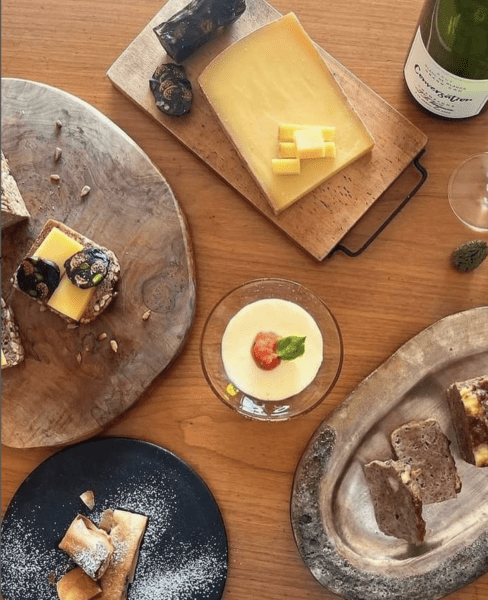
Craving Western food and wine? Shimanouchi Fujimaru is your answer. This is the first urban winery in Japan, where they pour their own natural wines and serve Italian food. The price of the drinks seems a bit high, but the taste is well worth it. They serve pasta and the Japanese-Italian fusion pasta is definitely worth a try.
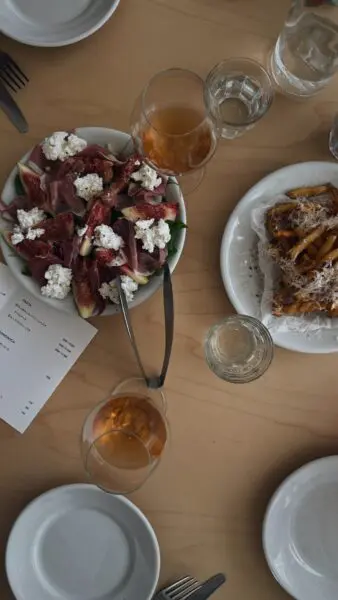
When you’ve been traveling through Japan for a long time, you eventually crave something closer to Western cuisine. And they do that damn well and beautifully in Osaka. At wine bar meets lunch cafe Booopooo (yes, really with three o's), you can enjoy Japanese coffee or wine while they conjure up the tastiest and freshest dishes that stray just a little further from traditional Japanese cuisine, but are no less delicious or fun for it.
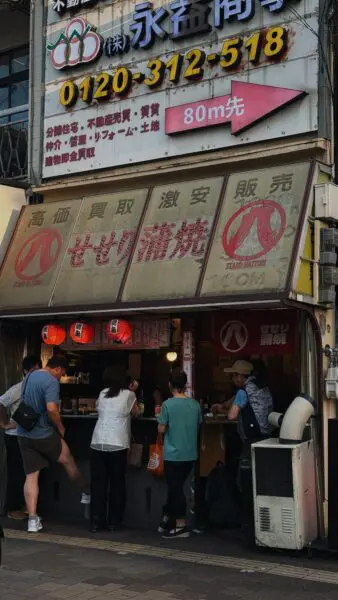
This standing bar (yes, there are quite a few of them) is a regular go-to spot for locals, and as tourists, we certainly wouldn't skip it either. Here, you eat the most delicious yakitori skewers, grilled right in front of you. And you do so while standing. There are perhaps 10 spots around the bar, which also doubles as the kitchen, but the atmosphere is fantastic, and you can tick off two cultural things from your list in one go.
More tips
-

Just married, just hungry: the ultimate honeymoon for foodies
-

Around the world with kids: great long-haul destinations for autumn and/or winter
-

Kyoto in Japan: list of the most delicious breakfast, lunch, and dinner spots
-

Ultimate Tokyo list: where to go for breakfast, lunch, and dinner
-

Do you want to experience the real 'old' Tokyo? Start at OMO3 Asakusa
-

The finest hotel in Kanazawa, Japan? You have to have OMO5 Kanazawa Katamachi.
-

You don't want to miss this accommodation (a find via Airbnb) in Azumino, Japan.
-

A unique stay near Lake Kawaguchi and Mt Fuji in Japan? You have to have this house on Airbnb!
-

Hotel OMO7 Osaka by Hoshino Resorts: the perfect base in Osaka, Japan
-

Fukushima is the Sake capital of Japan: this is the sake you want