


Bart's Booklet Best of: Bangkok, Thailand
Bangkok, transit city. Chances are you'll be planning your trip to Thailand or anywhere else in the world It all starts in Bangkok. At least, if you want to make it easy on yourself, you do. But it would be a shame to leave so quickly, because Bangkok is bustling with chaotic and colorful activity. Bangkok is more than just a transit hub, with serene temples and traditional markets, but also trendy rooftop bars and design hotels. And it's precisely that mix that makes a stay here so enjoyable.
Once you arrive in the city, it's important to choose the right neighborhood as your base. You don't want to start your trip in the bustling tourist center, where the streets are packed with tuk-tuks, souvenir shops, and hordes of day trippers. Instead, choose a neighborhood where the city has its own rhythm.
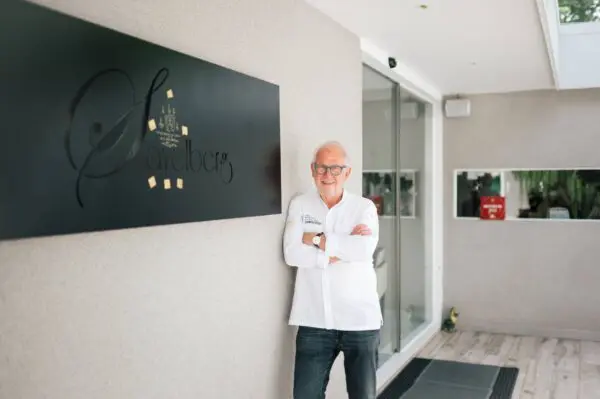
Bangkok has endless places to eat, but restaurant Savelberg is one of those places you'll truly want to sit down for. This is the restaurant of top chef Henk Savelberg, known for his Michelin-starred reputation in the Netherlands, who brings his French finesse and, of course, a touch of our own to the Thai capital.
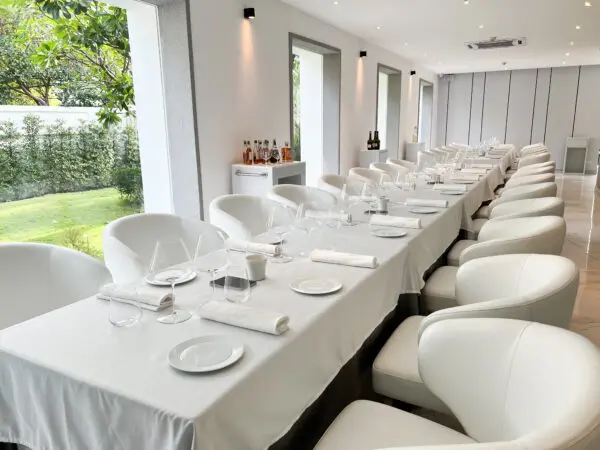
The restaurant, housed in a chic villa in Yan Nawa, feels luxurious without being stuffy. Inside, it's elegant, with an open kitchen and a small garden where you can enjoy a bit of greenery from your table. It's the perfect spot for a romantic dinner or simply an evening to treat yourself to something special.
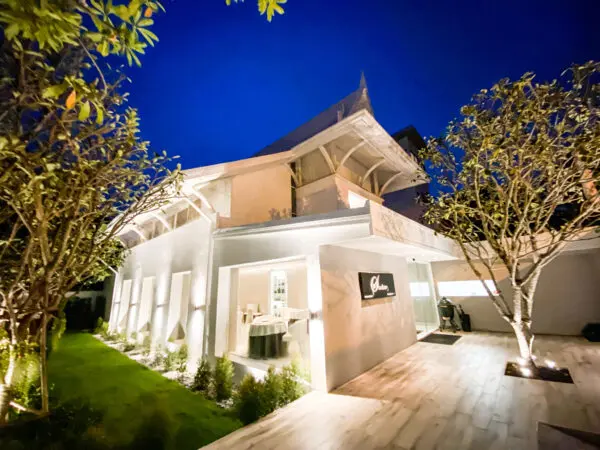
The menu features modern French dishes featuring lobster, scallops, and luxury fish, all with an eye for detail and a fresh, light touch. The dishes are stylish, refined, and always beautifully balanced, just as you'd expect from Savelberg.
Take some time to recover from your flight. There is a good chance that you are suffering from jet lag, culture shock and more of that kind of discomfort. Therefore one tip for the day of arrival: let yourself be massaged by the people of the Chetawan Health Center, because they know the tricks of the trade here. A Thai massage is an experience in itself: you lie here in a shared space, without oil, and are placed in all kinds of crazy positions. They provide the loose clothing. But that way you are immediately completely in the Thai atmosphere.
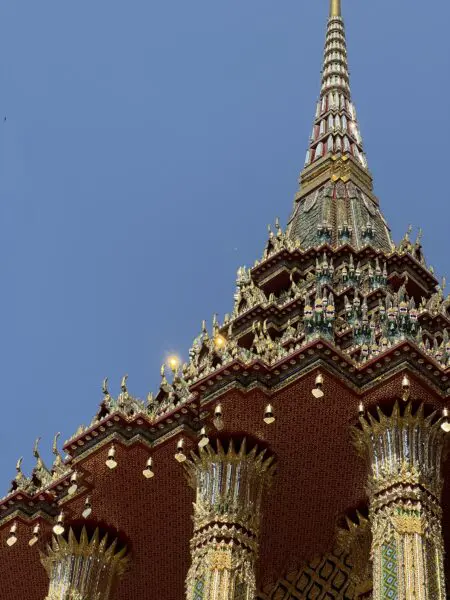
So, with a relaxed body or slight aches from everything that was loosened during the massage, you have arrived in Bangkok. On y goes: stroll through the old quarters or take your rest. The next day you can visit the Grand Palace and Wat Pho, the temple of the reclining Buddha and one of Bangkok's most visited sights. Impressive, gigantic and very golden. The best thing is to visit it with a tuk-tuk and then immediately make a trip through the city (book here).
The day after: the floating markets early in the morning, followed by a cooking course where you really learn to cook. Because yes, you want to be able to make that Pad Thai, Tom Yum, Gaeng Keow Wan and Mango Sticky Rice at home! You only visit the Chatuchak Weekend Market if you like chaos, otherwise you skip it.
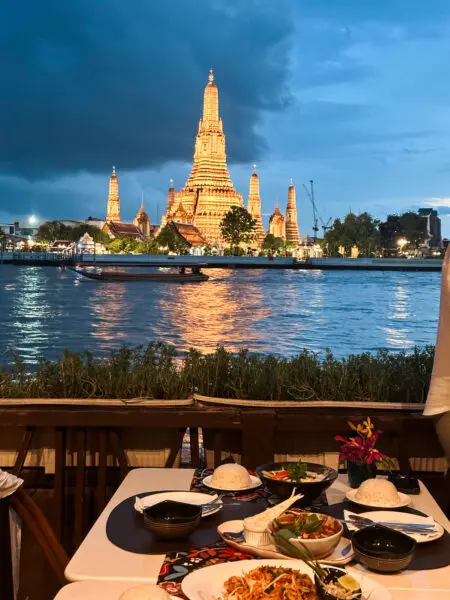
Still an evening to spare? Or no, better yet: free up an evening for dinner at one of the establishments along the Chao Phraya. Rooftop bars are fun, but equally fun places are located on the water. Eat Sight Restaurant is such a lovely place

The absolute best chance is that your trip to Thailand will end sooner or later in Bangkok. Or, of course, it begins. And then you better start your trip right. Or end it right. Ideally, you'll arrive by boat on the Chao Phraya River. Upon arrival, a jazz band plays in the background, someone calls your name before you even know where you are, and voilà—you've arrived at the legendary Mandarin Oriental, Bangkok.
It’s the city’s oldest hotel, but still one of the best. The hotel is housed in a two-story white Victorian building that stands like a throwback among the modern skyscrapers. Inside: butlers, chandeliers and the feeling that you (briefly) belong to high society. The butler service is of course tiptop, but honestly? You’d rather stare out of the window here all day.
Street food in Bangkok is a must, but you can easily skip it here for the in-house restaurant The Normandy by Alain Roux: crystal chandeliers, velvety chairs and dishes to die for. Don't feel like going fancy? Then opt for the iconic Bamboo Bar, where they know exactly what a negroni should taste like.
Expensive? Yes. Worth it? Absolutely.
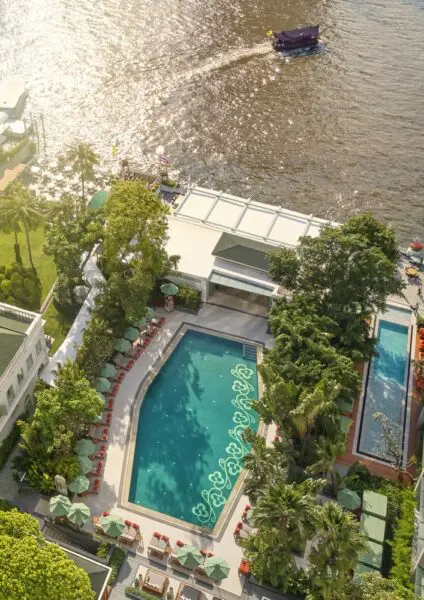
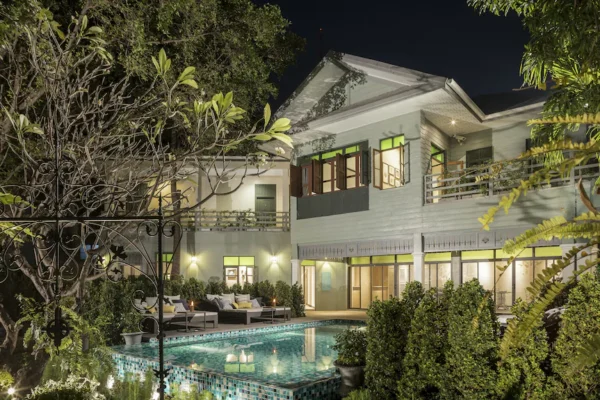
Then check in at The Raweekanlaya an authentic 20th century Thai hotel that immediately gives you the feeling that you are arriving quietly. No shiny hotel lobby, but rooms that are spread over several wooden buildings, it feels like you are stepping into the jungle. Oh, and with a swimming pool!
Take some time to recover from your flight. There is a good chance that you are suffering from jet lag, culture shock and more of that kind of discomfort. Therefore one tip for the day of arrival: let yourself be massaged by the people of the Chetawan Health Center, because they know the tricks of the trade here. A Thai massage is an experience in itself: you lie here in a shared space, without oil, and are placed in all kinds of crazy positions. They provide the loose clothing. But that way you are immediately completely in the Thai atmosphere.
Anyone who's seen The Hangover Part II will instantly recognize it: the iconic golden dome atop State Tower. Yep, Lebua at State Tower isn't just one of Thailand's nicest (and most luxurious) hotels, it's also a film set where you can stay overnight. Thankfully, you won't wake up to a tiger in the bathroom. So, what will you wake up to? Think: breathtaking views of the Bangkok skyline, a dizzyingly high infinity bar, and cocktails on the second floor. But also: dining at one of the two Michelin-starred restaurants, a lovely swimming pool, and a truly delicious breakfast. Perfect for a touch of luxury to start or end your trip, or just to say you slept where the chaos began. You can also just enjoy a drink on the rooftop, by the way.
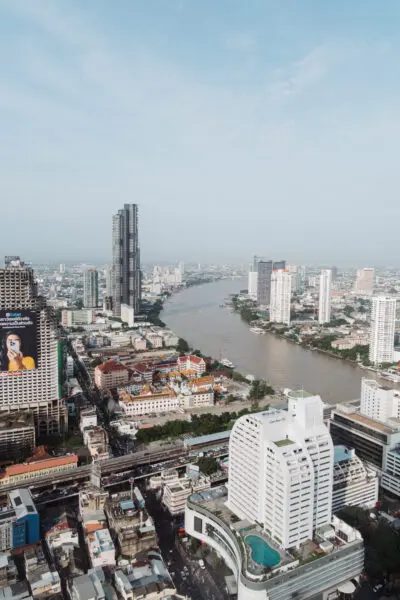
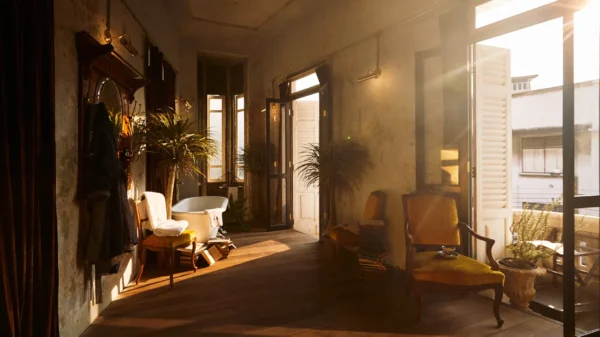
Aman Nai Lert Bangkok: Tucked away in a green garden in the heart of the city, it has everything you would expect from Aman: serene spaces, refined materials, a spa you'll never want to leave, and a tranquility that's almost un-Bangkok.
The Peninsula Bangkok: Classically chic, elegant, and beloved by travelers who want to experience "the real Bangkok" but with top-notch service. The rooms overlook the river, the pool meanders along the water, and the boat that takes you across completes the experience. Luxury without the fuss.
The Sukhothai Bangkok Hotel: One of the city's most stylish hotels, with serene ponds, modern Thai architecture, and rooms that feel like a luxury retreat. Come here to relax, dine (the restaurant is fantastic!), and enjoy a hotel where everything has been meticulously thought out.
The Mustang Blu: Perhaps Bangkok's most photogenic hotel: an old, blue mansion brimming with character, flowers, art, and that typical, delightfully dilapidated feel that's impossible to recreate. Every room is unique, and the atmosphere is truly unique.
Almost embarrassing to mention, but secretly quite enjoyable. Khao San Road is chaos, backpackers, street food, neon, and noise, and yet you simply have to experience it. Not fancy, but incredibly lively.
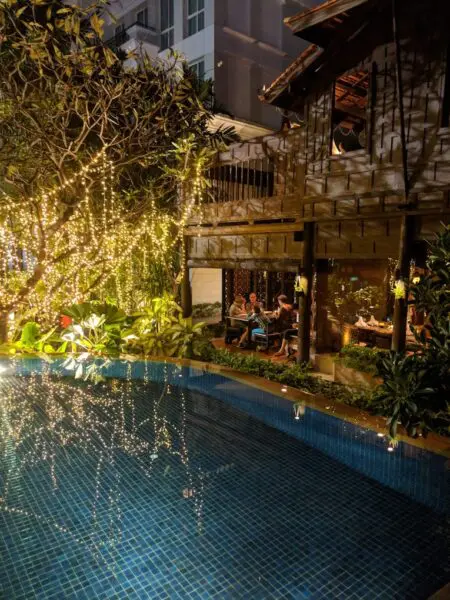
Another true classic, in terms of story, setting, and menu. Ruen Urai, which means "House of Gold," is one of those places where everything is perfect: the elegant, almost romantic Thai interior, the warm light, the classic wooden details, and an atmosphere that feels like stepping into a traditional home from another era.
The menu draws inspiration from various regions of Thailand and effortlessly blends recipes from royal Thai cuisine to refined home cooking. It's traditional, but never stuffy; a great spot for first-timers or anyone truly wanting to explore Thai cuisine. From miang khum and pomelo salad to fragrant curries, a perfectly cooked Pad Thai, and, of course, mango sticky rice.
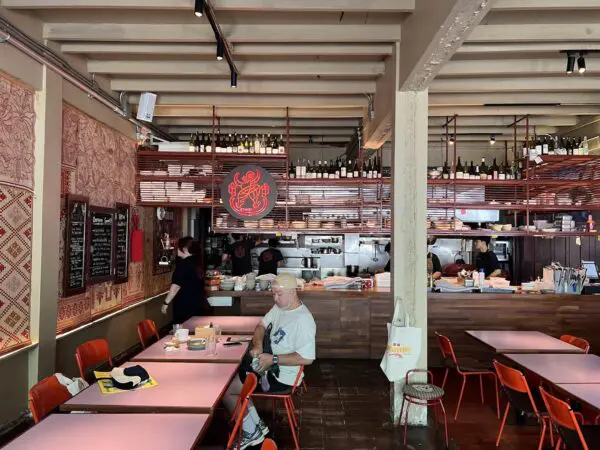
Charmgang is a modern Thai hotspot where the chef's flavor rules. Tucked away on a side street in Chinatown, this modern curry house gives Thai cuisine a fresh, creative twist. The three young chefs, all trained at the legendary Nahm, don't cook conventional dishes but rich, creamy curries with a deep kick, slow-cooked meat that falls apart under the gaze, refreshing acidity, unexpected textures, and combinations that work perfectly.
The interior is cozy and colorful, even a little edgy. With warm lights, an open kitchen, and that signature Charmgang energy that balances perfectly between casual and cool. Charmgang is Thai comfort food next level.
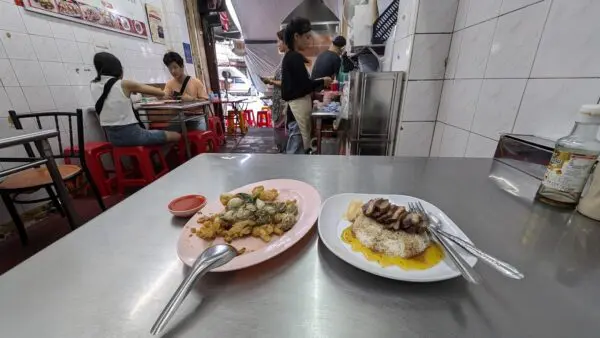
For those who like it crispy, juicy, and savory, Nai Mong Fry Oyster makes Bangkok's most famous oyster omelet, a crispy-creamy masterpiece that sizzles in the wok and arrives on your plate in under a minute. Expect plastic chairs, a chef who rotates the pan with military precision, and an omelet that's golden brown and crispy on the outside yet stays soft on the inside, thanks to those briny oysters.
In Chinatown lies Yim Yim, an old-school Chinese eatery with at least a hundred years of history. No bling or tourist trappings here, just a homey, familiar setting with a cozy space above a house, wooden tables, a simple interior, and the feeling of sitting in a family restaurant where generations have been cooking.
The menu features classic Teochew and Chinese dishes such as clay pot fried tofu, crispy tofu rolls, rice with Chinese olives, or hearty dishes with fish, seafood and noodles.
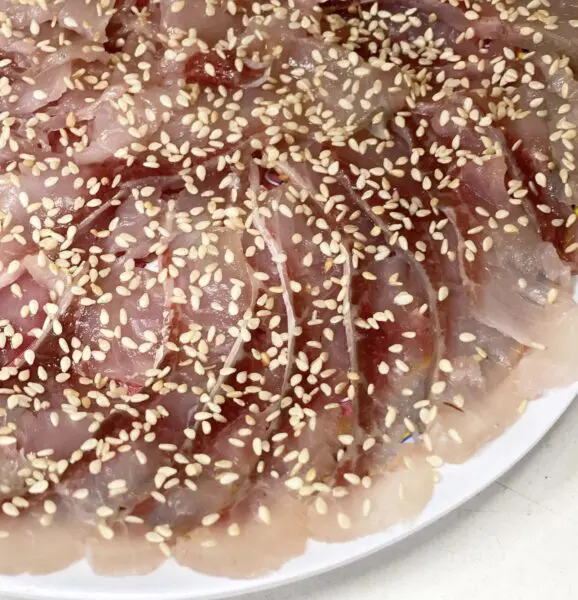
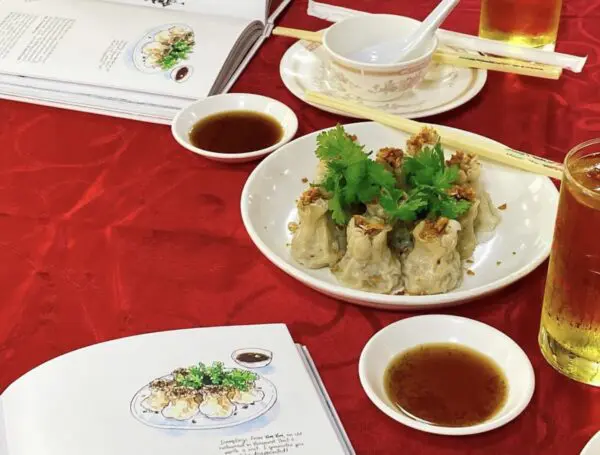
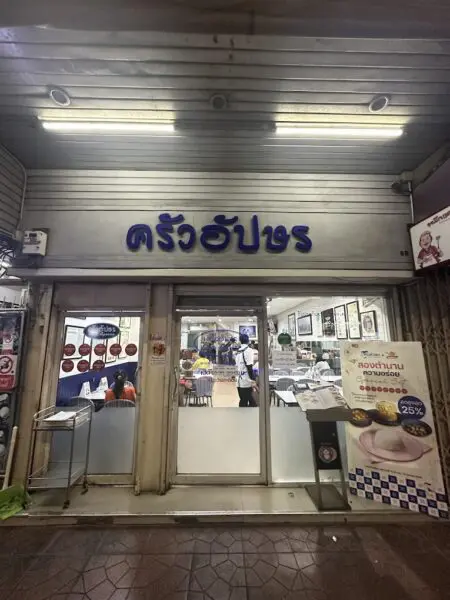
A classic and a favorite among locals (especially office workers), Krua Apsorn, founded by Aunt Daeng, serves Thai dishes the way they're meant to be. Order the crab dishes (a must!), the flower omelet, or the yellow curry.
Want to bet it's good? The founder was once asked to be a royal chef by Princess Mother Srinagarindra, the mother of the late king. The restaurant also holds a Michelin Bib Gourmand.
Aksorn is the domain of chef David Thompson, known for his love of traditional Thai recipes. Here, you'll find dishes based on cookbooks from the 40s to the 70s, a period when old Siam slowly gave way to modern Bangkok. The restaurant is located above a famous old bookstore. The interior is beautiful, the wine list is highly recommended, but the real highlight is the food.
From refined dishes like minced shrimp with red shallot and roasted peanuts to robust flavors like steamed pork ribs with bitter melon and squid, there's also the breathtaking sour orange curry of river prawns with green papaya.
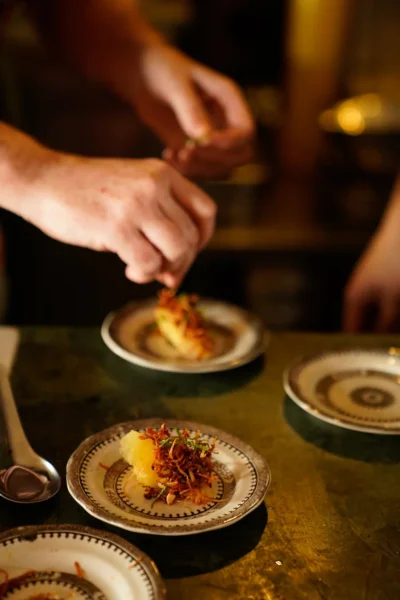
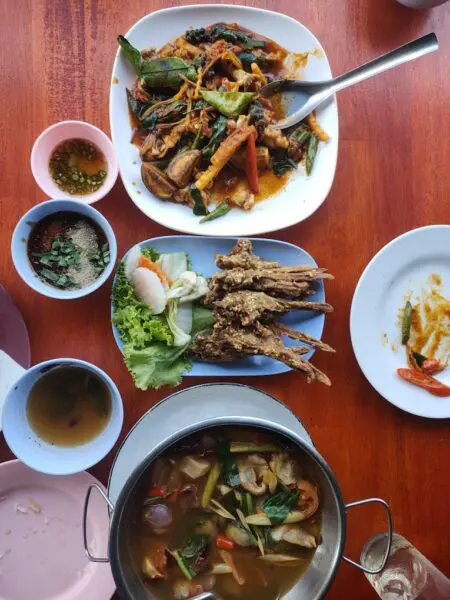
last man standingBecause this restaurant is one of Bangkok's last true klong restaurants. Klong, what? Klong restaurants are places located right on the klongs, the narrow, canal-like waterways that run through Bangkok. Restaurants literally built on or above the water, often on wooden stilts. You sit overlooking the klong, where longtail boats, houseboats, and locals pass by. Many of these eateries are old-fashioned, simple, charming, and incredibly local. And so is this one. A cozy, chaotic waterfront dining experience, where fans hum softly and longtail boats glide by. You hardly see any tourists; it's mainly locals who settle here for bowls of gloriously sour soups and the signature dish: a whole snakehead fish, crispy fried and covered in toasted rice powder, a kind of larb salad taken to the next level. Everything here tastes light, super fresh, and dangerously spicy at the same time.
More tips
-

One reservation you'll want to make right now for your Cape Town/South Africa vacation
-
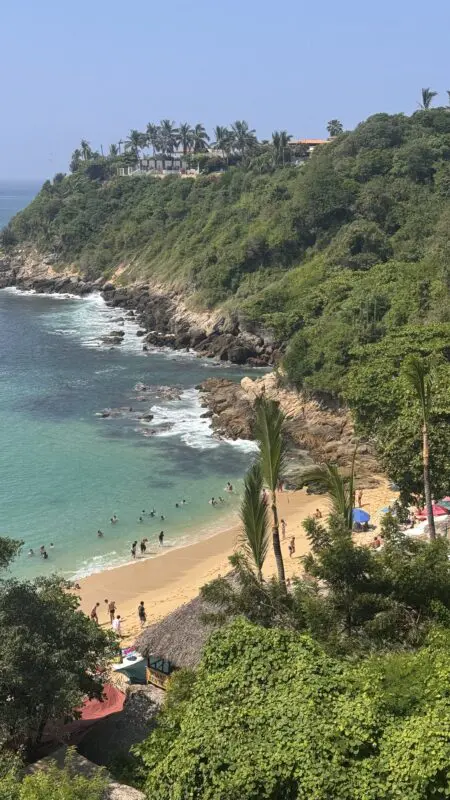
Oaxaca and Mexico City Tour: These are the best tips
-
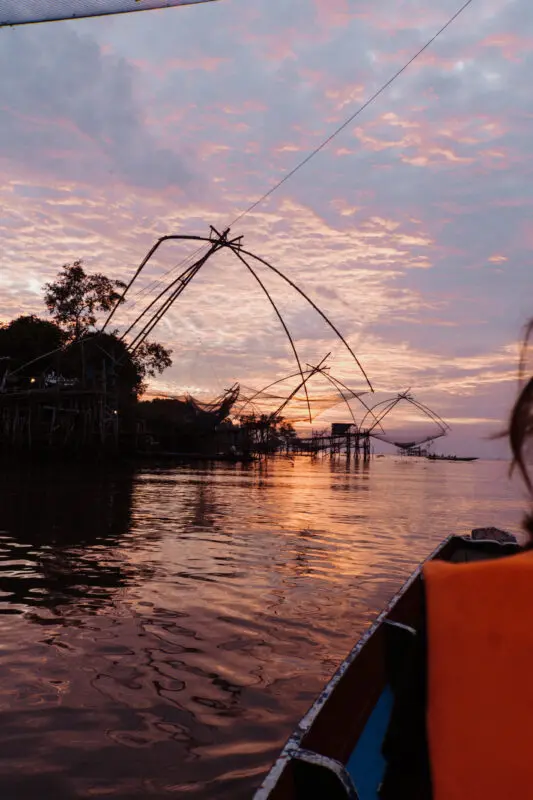
Tour of Southern Thailand: and not where the crowd goes
-

Honeymoon in Malawi (a must!): these are the most beautiful lodges for your honeymoon
-

Malawi is Africa's best-preserved safari and tropical destination.
-

But isn't that nerve-wracking? A long-distance trip with kids? Small children, big vacation: these are our tips and advice.
-

But isn't that exciting? This way, you can count on a smart travel partner during your baby or honeymoon.
-

Hiking Mount Everest Base Camp: The Ultimate Hike – Part 1, the preparation
-

You don't want to miss this accommodation (a find via Airbnb) in Azumino, Japan.
-

A unique stay near Lake Kawaguchi and Mt Fuji in Japan? You have to have this house on Airbnb!