


Taiwan is the best-kept Asian destination for nature lovers
We're going to Japan, the Philippines, and China, but we all seem to have a bit of a blind spot when it comes to Taiwan. Here are just a few of the things people throw at us when we tell them we're traveling to Taiwan: "Isn't that where they make the chips for cars and phones?" or "Bubble tea comes from there!" and "I know Taipei 101."
With that in mind, it's no wonder we're not enthusiastic about visiting this island. Do with that blind spot what you will, but we suggest you take advantage of it. Because this island has pretty much the best of its neighbors, just without the mass tourism. In our opinion, Taiwan is the best-preserved Asian destination for nature lovers.
You have the cuisine and language of China. But also Japanese influences thanks to the dominance of Chinese architecture from 1895 to 1945. The teahouses, the onsen, and that Japanese orderliness in the cities—everything runs smoothly. And let's not forget the tropical atmosphere of the south of the island, a place you'll only find in the Philippines, with palm trees, beaches, and relaxation mode on.
Seventy percent of the country is covered by forests and mountains, which immediately dispels the image of Taiwan as the world's only factory.
For us, the journey begins in Taipei. But the real adventure lies ahead east coast of Taiwan. Here you will find top-class outdoor living: hiking, cycling, surfing, diving, canyoning… We divide the trip into days, but the trip is flexible and you can adjust the number of days.
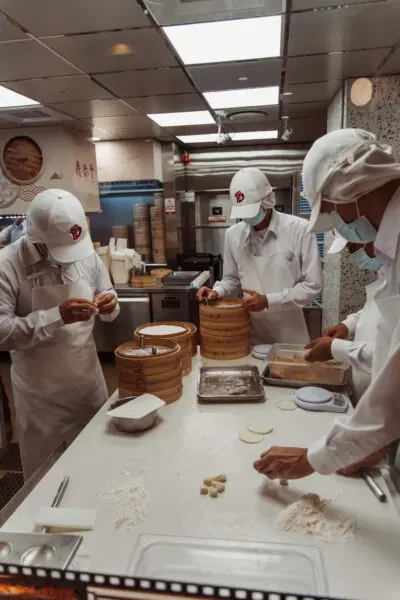
Taiwan is everything you love about Asia, without the crowds.
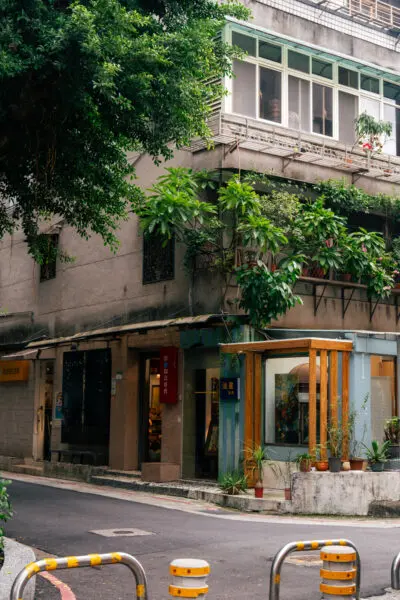
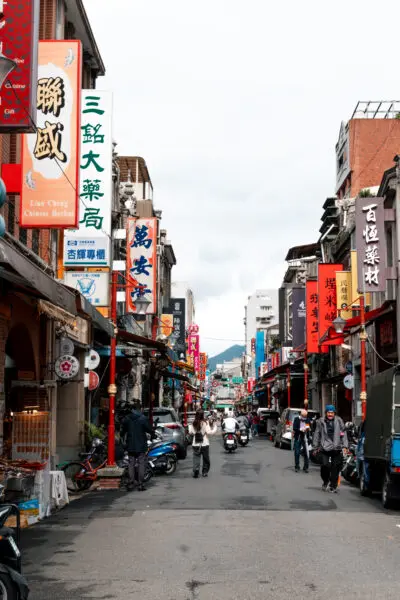
You'll likely land in Taipei, and you'll be in luck. The aroma of Asia wafts over you in the city, which feels like a mix of Seoul, Tokyo, and Bangkok, though we can't quite put our finger on it. It's certainly vibrant, organized, and has that delightful Asian air (although with stinky tofu, one of the local specialties, which smells a little less pleasant). First things first and that's your portion of dumplings to eat at one of the world famous Din Tai Fung business and then relax while strolling along Yongkang Street, where trendy coffee bars steam next to bamboo stalls.
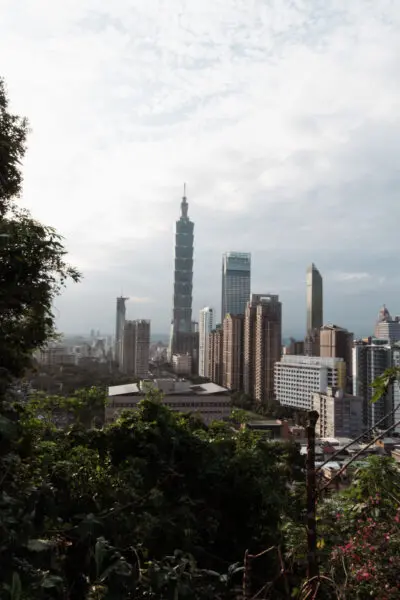
A perfect first introduction is the hike to Elephant MountainYou walk up through the trees towards a magnificent skyline. Taipei 101 towers over the city like a bamboo stalk. In the evening, you're immersed in the chaos of a night market, and there are quite a few. Raohe Night Market is a great place to start for sizzling grilled meats, bubble drinks, soup dumplings, beer on plastic stools, and everything mixed together in the best kind of organized way.
You can easily spend a few days enjoying Taipei, so be sure to grab our comprehensive guide.
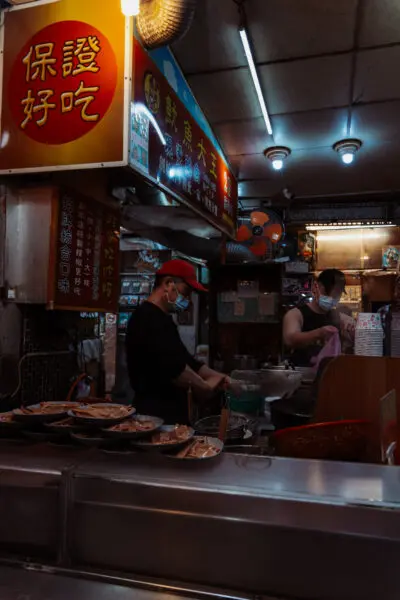
Disclaimer for the text below: not everything may be open as you'd hope. The trails at Taroko may be closed, and the Shrine may only be visible from the outside. Check the current opening hours before you go to avoid finding a closed door.
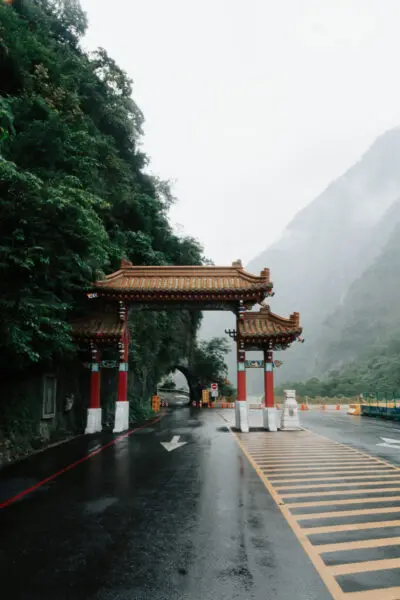
But the real spectacle lies outside the city. Ask a local about their favorite spot, and chances are they'll point you to the east coast. Just south of Taipei lies the real Taiwan: less crowded, more nature, more peace and quiet, and a vacation for the locals par excellence.
You start quietly from Hualien (The train will get you there in no time, but with your own car, you'll have a bit more freedom.) A compact city surrounded by mountains, rice paddies, and coastlines. Gray or not, it's still beautiful. Hualien is a great place to fill your days. Dongdamen Night Market is For example, a large, lively night market with street food from oyster omelets to peanut mochi. Stroll along the Ziqiang Night Market Boulevard And if you fancy a coffee break, you can find it at one of the many minimalist coffee bars the city has to offer. The nicest one, in our opinion, is 田園記咖啡, aka grandfather coffee. An extremely friendly man who has been making the best coffee in town for years in a (call it) vintage bar just outside his house.
Silks Place Taroko is a beautiful hotel in the park
From Hualien is Taroko National Park easy easy to reach and that park is the real reason why tourists (mostly Taiwanese) are in the city. Hop on a bike or scooter from Hualien to Taroko National Park. Once you arrive, a guided tour or driving yourself is the easiest option. When you see the iconic Taroko Archway As you drive underneath, you will find yourself among the marble cliffs, rivers and bridges that make the park so characteristic.
The park is vast, and nature is doing its own thing. Therefore, certain areas sometimes become inaccessible due to landslides, earthquakes, and flooding, which are common in the area. A little flexibility is therefore required. Beautiful, yet fragile.
Must-do's in Taroko are the Shakadang Trail, a relaxing stroll along a turquoise river, perfect for your first Taroko moment. Swallow Grotto (Yanzikou Trail) is known for the swallows that skim between the cliffs here. And then there is the Baiyang Trail, which ends at a waterfall that flows right through a cave: a raincoat is not an unnecessary luxury.
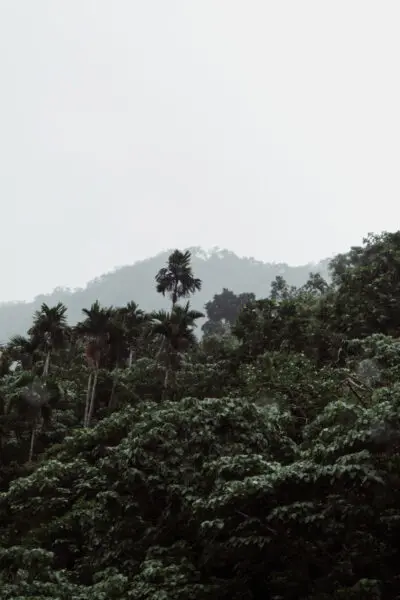

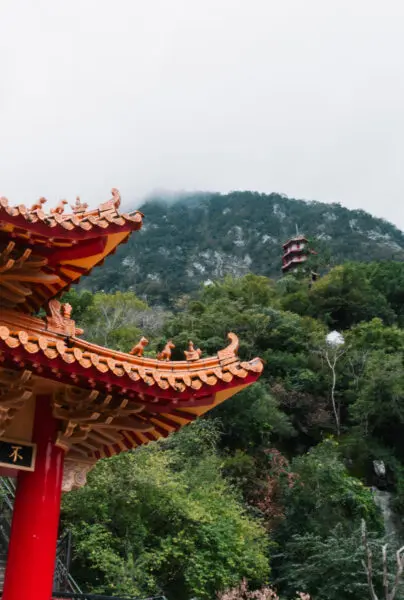
Eternal Spring Shrine is a temple that seems to be glued to the cliffs. The sooner you enter the gorge, the quieter it becomes.
You will have lunch at a local restaurant between hikes tribal restaurant (like Dakili Tribal House) where dishes are prepared according to traditional recipes of the indigenous Atayal and Truku peoples. With grilled wild vegetables, sticky rice in bamboo, and grilled game. Interesting!
Have some time left? Then visit us Gangtian Temple en Pine Garden, an old military headquarters overlooking the sea, now transformed into a museum with a garden full of pine trees.
Take for Taroko National Park Take your time. Even though some trails are (temporarily) closed, there is so much to see. As you drive further south, the nature around you changes. Along the way, you'll experience a must-stop at the Keishuin Shrine, One of the most beautiful temples we saw. A small remnant from the Japanese colonial period and a prime example of how Japanese architecture and Taiwanese nature blend seamlessly. Red ribbons flow in the wind, wishes and prayers hang everywhere, and if you're lucky, someone might be performing a ritual.
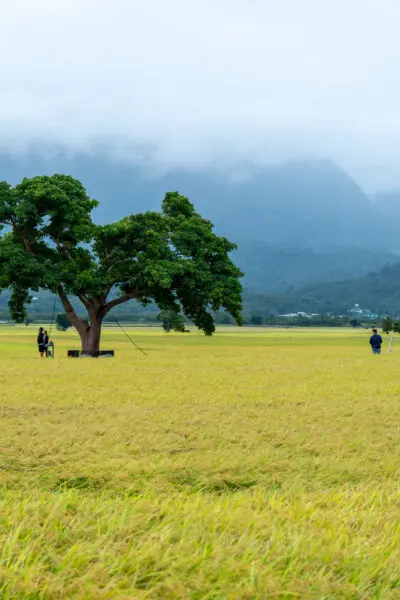
And then… on to ChishangPerhaps the most beautiful landscape Taiwan has to offer. The rice paddies form a neon-green carpet between two mountain ranges: the Central Mountains on one side and the Coastal Range on the other. Intensely green. Time to pedal, because in the village you can rent bikes, from simple city bikes to electric models or even fun family bikes. Along with Taiwanese families, couples, and grandmothers on e-bikes, you'll enjoy a relaxing ride through the fields. The path is flat, wide, and wonderfully peaceful; every now and then, everyone stops to take pictures.
We'll throw in another fun fact: Taiwan is about the same size as the Netherlands.
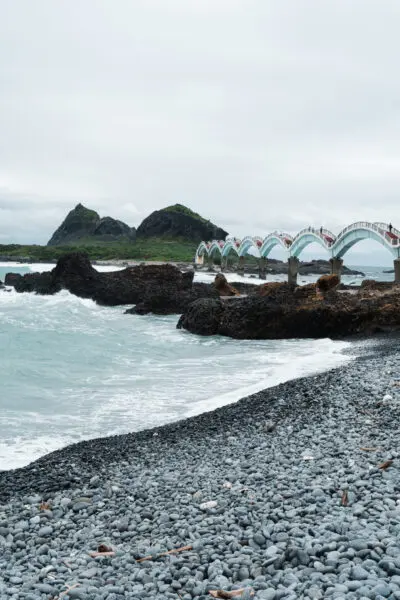
On to Sanxiantai, an island reached via an iconic red-blue bridge that curves over the sea like a mermaid's spine. The view is the main reason to go: rugged cliffs, splashing seawater, basalt rocks. It's almost always windy here, and your job is simply to follow the path.
Now we've seen that water from a distance, now you can dive in. Because you can here SUP session with the local organization Sunrise SUP Taiwan books. They know the waters around Sanxiantai like no other and will take you for a paddle. If the northeast monsoon blows too strongly, which happens often, they will divert to Stone UmbrellaIt was too windy for us so we went to Stone Umbrella, but it was beautiful.
Hiking and SUPing require concentrated food, and from the Indigenous cuisine, the cuisine of the original inhabitants of Taiwan. You eat at Mibanai Mountain, a restaurant that uses local ingredients and traditional cooking techniques. The cuisine of Taiwanese Indigenous communities is perhaps one of the most unique in Asia, yet remains remarkably under the radar in the rest of the world.
And then there is the Zhiben Forest Recreation Area Yet another forest full of rivers, green shade, and hot springs. It's wonderful to wander around here on the well-maintained trails. The paths are clearly marked with a map, and for a well-deserved pit stop, you can dip your feet in a hot spring or picnic in the shade of ancient trees.
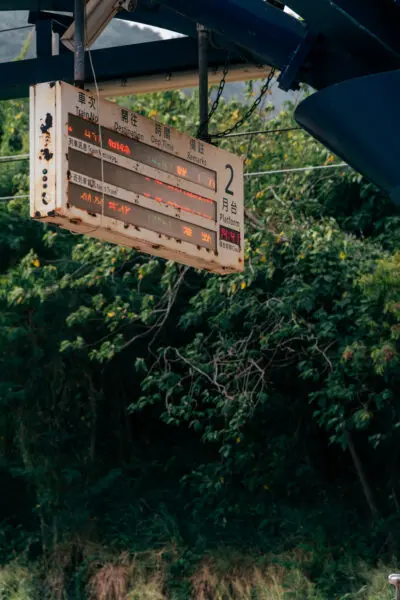
You can rest your legs afterwards Breezy Blue Train: the famous blue and white retro train to Fangliao. The windows can be opened and outside you can see rice fields, villages, and mountains passing by. You can stop for Jinlun Village and the Paiwan Church (to be honest, we preferred the views).
In Taiwan, you can experience mountains, sea, and #citylife, perhaps all in one day. If you truly want to experience the tropical south (e.g., tropical vibes, palm trees, relaxation mode), you can spend a few more days in Kenting or nearby coastal towns.
What you do next is up to you (the west coast and the south are also interesting!), but if time is unfortunately up, you can return to where it all began. Taipei it is, but not without a final few days in the city. The city is bustling and everything is super efficiently accessible within walking distance or via the Taipei Metro.
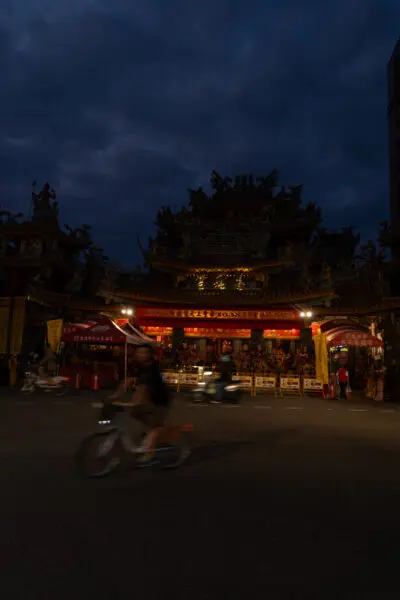
Sla Dadaocheng, not about one of Taipei's oldest districts. Here you can rent a bike and cycle past old warehouses, traditional teahouses, and narrow alleys full of colorful murals. Before lunch, a visit to one of the most famous beef noodle spots Tien Hsia San Chueh is a must. Hearty noodles and a rich broth. And then you can Taipei 101 Don't miss it. This iconic building offers a stunning view of the city, weather permitting. And if you really want to live the city life to the fullest, just go to a night market.
You couldn't wish for a better ending to your Taiwan trip.
More tips
-

One reservation you'll want to make right now for your Cape Town/South Africa vacation
-
Oaxaca and Mexico City Tour: These are the best tips
-
Tour of Southern Thailand: and not where the crowd goes
-

Honeymoon in Malawi (a must!): these are the most beautiful lodges for your honeymoon
-

Malawi is Africa's best-preserved safari and tropical destination.
-

But isn't that nerve-wracking? A long-distance trip with kids? Small children, big vacation: these are our tips and advice.
-

But isn't that exciting? This way, you can count on a smart travel partner during your baby or honeymoon.
-

Hiking Mount Everest Base Camp: The Ultimate Hike – Part 1, the preparation
-

You don't want to miss this accommodation (a find via Airbnb) in Azumino, Japan.
-

A unique stay near Lake Kawaguchi and Mt Fuji in Japan? You have to have this house on Airbnb!